Rows
Use each digit once per row
Each horizontal row must contain 1, 2, 3, 4, 5, 6, 7, 8, and 9 exactly once. If a digit already appears in that row, it cannot be placed in another empty cell on the same line.
Analytics preferences
NYT Sudoku uses privacy-conscious analytics to understand page usage and improve the game. Accept or reject analytics; either choice is saved and closes this notice.

Free online Sudoku
Play structured Sudoku levels, daily Easy, Medium, and Hard puzzles, and unlimited generated practice.Unofficial and independently generated. No official New York Times puzzles or endorsements.
How to play
This page is built for players who want to start solving first and read only when they need a rule reminder. Every puzzle uses the classic 9x9 Sudoku rule set: each row, column, and 3x3 box must contain the digits 1 through 9 exactly once.
Rows
Each horizontal row must contain 1, 2, 3, 4, 5, 6, 7, 8, and 9 exactly once. If a digit already appears in that row, it cannot be placed in another empty cell on the same line.
Columns
Every vertical column follows the same rule. A good first scan is to pick one digit, look down the columns where it already appears, and remove impossible positions from nearby boxes.
Boxes
The nine 3x3 boxes must also contain every digit once. Box logic is often the fastest way to start an Easy puzzle because givens inside one square can quickly force the remaining cells.
What is NYT Sudoku?
This site is for players searching for fast, free, newspaper-style Sudoku. It does not use official New York Times puzzles, screenshots, logos, or endorsements. The board, 200-level path, daily puzzles, unlimited games, notes, stats, resume flow, and share text are built for this independent site.
The goal is simple: open the page, start the next level, and solve a real Sudoku puzzle without account walls or decorative distractions. The page keeps the game board close to the first screen, then supports search visitors with clear rules, difficulty notes, solving guidance, and answers to the most common Sudoku questions.
Google sign-in is optional and exists only to support cloud save when production credentials are configured. Guest play still works in the current browser, which matters for people who want a quick daily Sudoku break without creating an account.
Game modes
Different Sudoku players arrive with different intent. Some want a structured path, some want one daily puzzle, and some want a fresh board after every solve. The homepage supports all three without hiding the playable grid behind a marketing page.
Levels
Level mode starts at Level 1 and moves through a fixed 200-puzzle progression. Early levels are built for warmups and rule confidence. Later levels introduce more empty cells, tighter candidate work, and slower solves that reward careful notes.
Daily
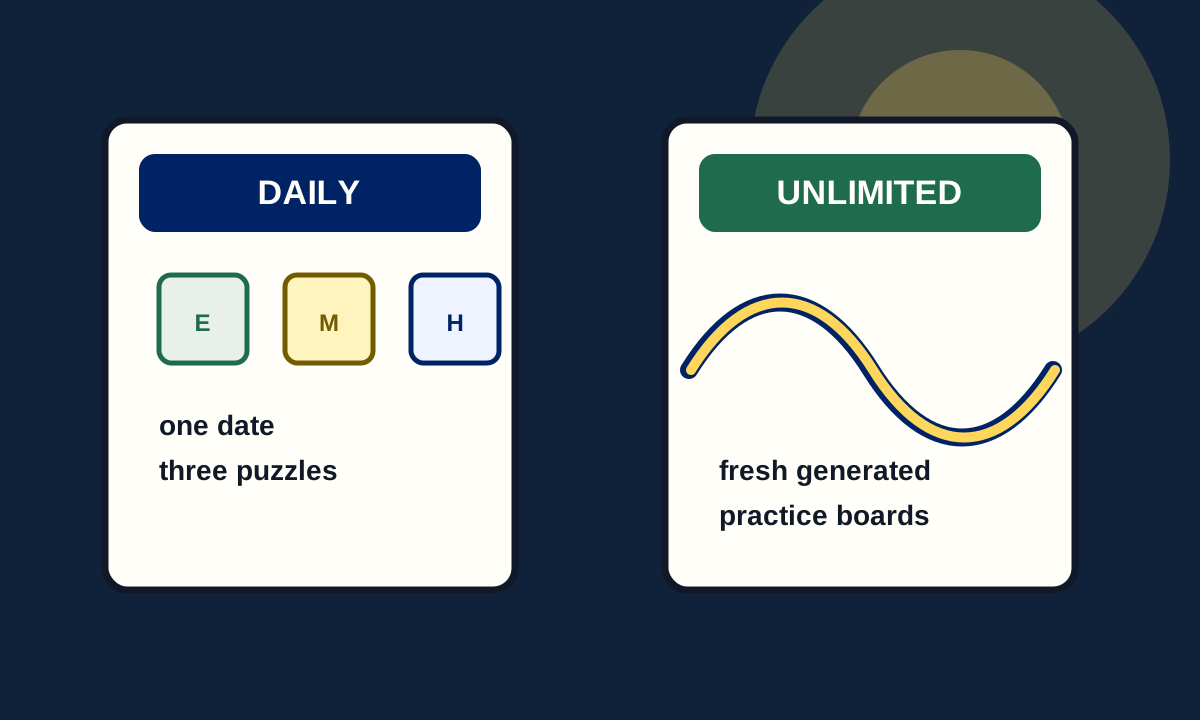
Daily mode gives a simple routine: one Easy, one Medium, and one Hard generated puzzle for the date. It is useful for players who want a repeatable habit and a clean way to compare how each difficulty feels.
Unlimited
Unlimited mode is the practice room. Use it when the daily board is finished, when you want to drill one difficulty, or when a strategy guide tells you to practice singles, notes, locked candidates, or no-guess solving.
Mode intent
Daily puzzles work best when a player wants a small routine: one Easy, one Medium, and one Hard puzzle tied to the date. Unlimited puzzles work best when a player wants repetition. A solver can finish the daily board, switch to Unlimited, and keep practicing the exact difficulty that exposed a weakness.
Keeping both flows on the same page also helps search visitors understand the product quickly. They do not need to compare several separate landing pages before reaching the board. The mode selector changes the puzzle source, while the rules, notes, keypad, timer, and completion behavior stay familiar.
Why play here
The product surface stays centered on the board. Controls are compact, destructive actions are separated, and mobile layouts keep the keypad below the grid so repeat daily play stays comfortable.
Progress
Guest games save in this browser, including the current puzzle, selected difficulty, notes, elapsed time, and local statistics. That makes the page useful for quick breaks, mobile sessions, and longer Hard puzzles that need more than one sitting.
Tools
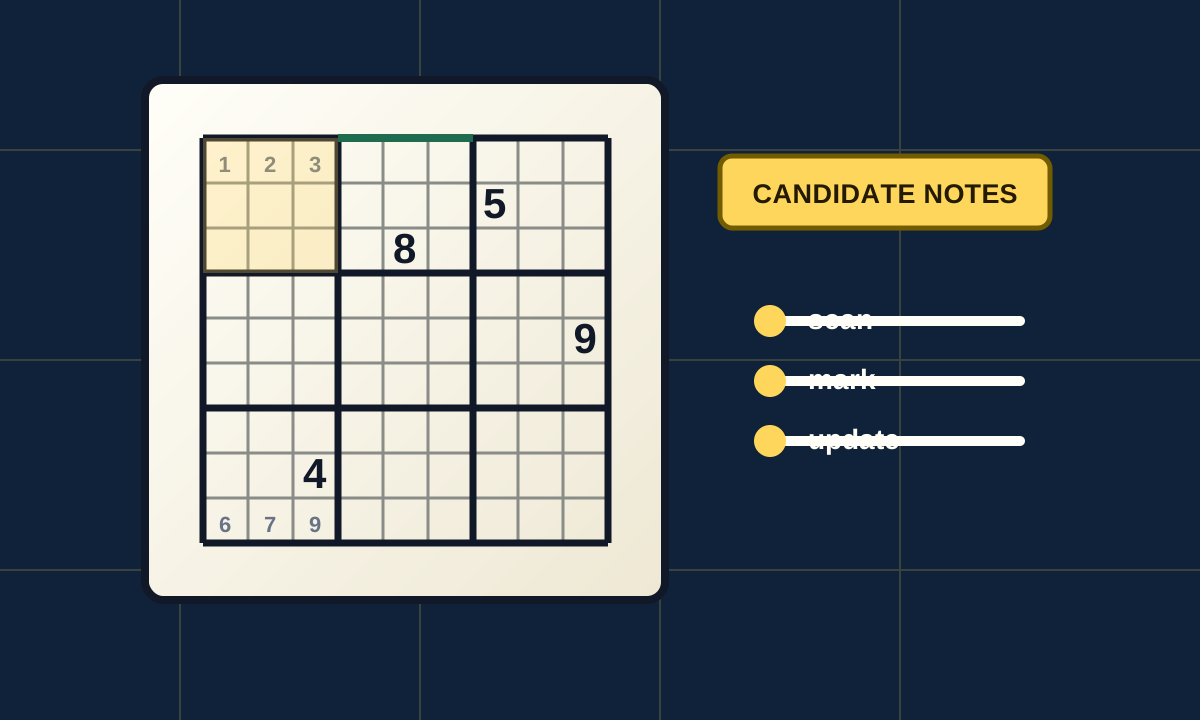
Use notes for candidate tracking, undo mistakes, erase safely, and ask for a basic hint when a puzzle stalls. Stats track starts, completions, best times, averages, and daily completion patterns.
Difficulty
Levels 1-70 are Easy, 71-140 are Medium, and 141-200 are Hard. Daily and Unlimited modes still let you jump directly into Easy, Medium, or Hard practice.
Rules in detail
A Sudoku clue is a fixed number. You do not move it, erase it, or replace it. Every empty cell starts as a question: which digits still survive the row, column, and box checks? Once only one digit survives, that cell is forced. Once a digit has only one possible place in a unit, that placement is also forced.
This is why Sudoku is a logic game rather than an arithmetic game. The digits are symbols. You are not adding them together. You are proving where they can and cannot go. Good boards can be solved by a chain of small deductions, and the interface is designed around that loop: inspect a unit, make a note, place a forced digit, then update the surrounding candidates.
The site validates against its own generated solution. A completed board needs every cell filled and every row, column, and box consistent with that solution. If the board stalls, use notes first, undo small mistakes, and use hints as a nudge rather than as the main solving method.
Visual guide
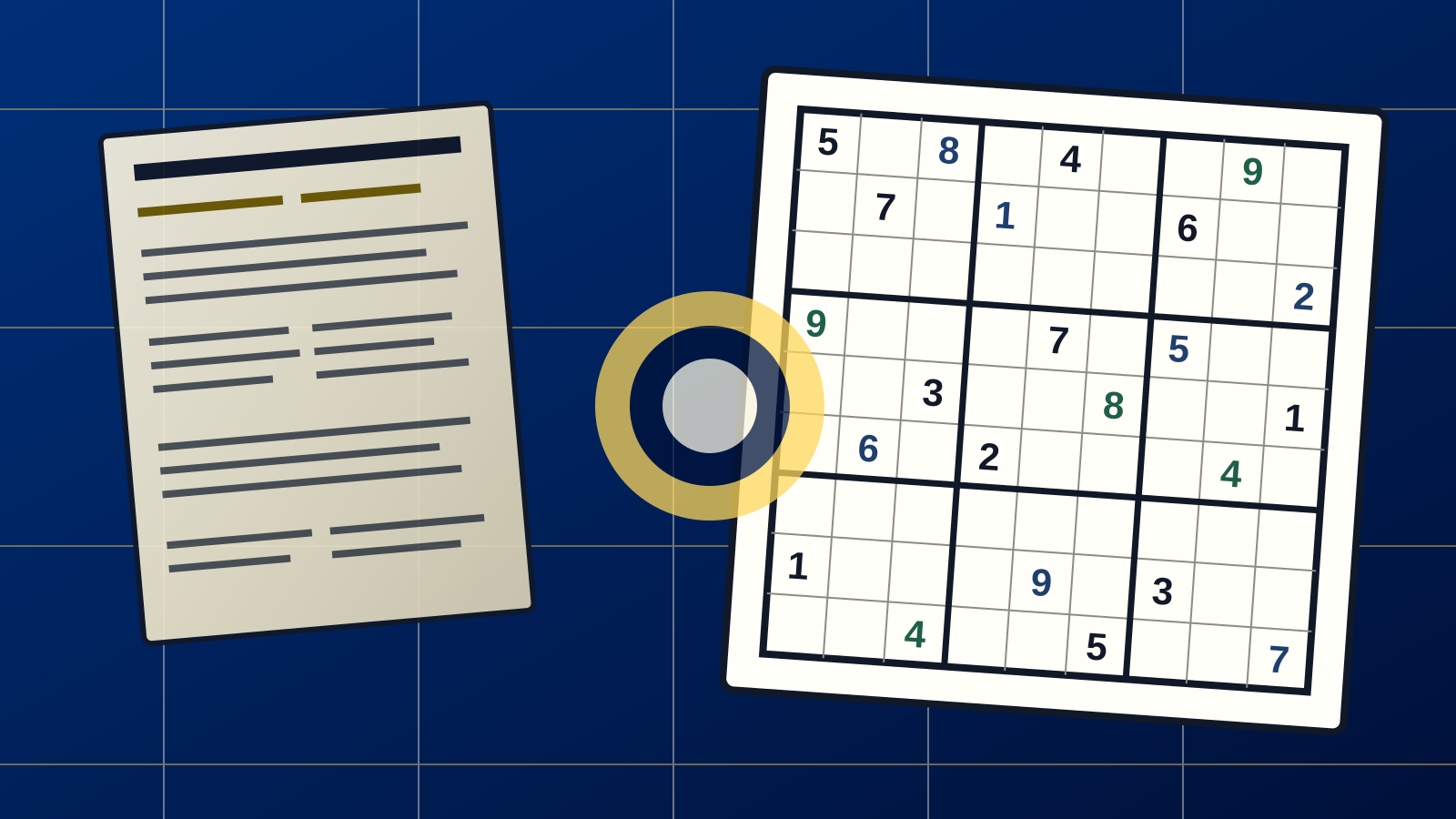
Sudoku pages need more than rules text. The board, clue contrast, candidate notes, and surrounding controls should make the solving state easy to read at a glance, especially when players switch between quick Easy boards and slower Hard puzzles.
Candidate notes
Pencil marks are useful when they stay tied to the row, column, and box checks. The interface needs enough contrast for final answers, fixed givens, and small candidates so players can keep solving without losing the board state.
Board first
The one-page SEO content supports the playable board instead of replacing it. Search visitors still land near a usable Sudoku grid, then can scroll for rules, difficulty guidance, strategy, and FAQ content.
Difficulty clarity
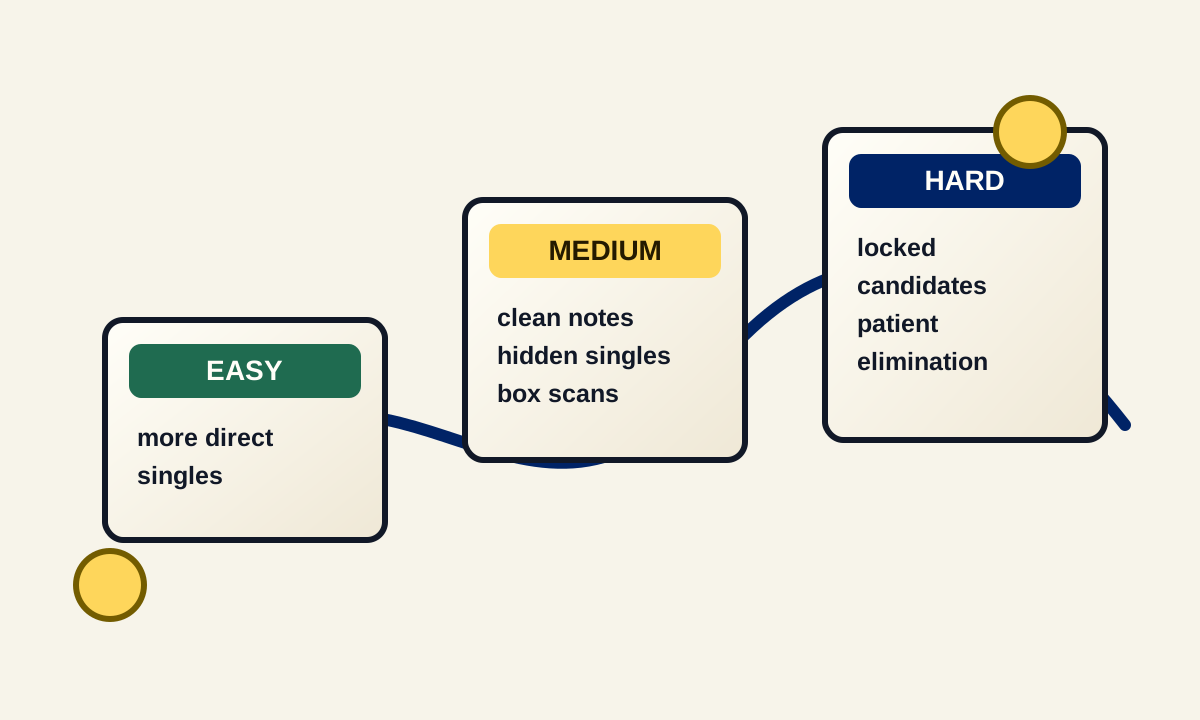
Easy, Medium, and Hard are not just labels. They tell players what kind of solving session to expect: quick singles, cleaner notes, or slower candidate elimination.
The images in this section are supporting assets for the one-page content. They help break up the long SEO copy, but they do not replace the explanation. The page still needs enough plain text for players and search engines to understand the rules, the differences between modes, and the reason the site is independent.
That balance matters for a game page. A player should be able to inspect the board, read a short rule summary, and then keep going into deeper strategy only if they need it. The visual assets make the page easier to scan while the surrounding paragraphs carry the actual Sudoku guidance.
Solving tips
Good Sudoku solving is less about speed-clicking and more about keeping the candidate list honest. Use these habits when a board starts to slow down.
Look for rows, columns, or boxes where a digit has only one possible home. These hidden singles are easy to miss because the cell may still show several notes.
Notes are useful when they stay current. Start with crowded boxes and nearly complete rows, then clear related notes after every solved digit so the grid stays readable.
If every possible position for a digit inside one box falls on the same row or column, that digit can often be removed from the rest of that line.
The hint system fills the selected empty cell first, or the empty cell with the fewest candidates if none is selected. Treat it as a way to restart the logic.
Undo and erase handle small mistakes. Reset is separated visually because it clears the current puzzle state, including placements and notes for the active board.
Easy teaches rhythm, Medium trains candidate cleanup, and Hard asks for patience. Move down a difficulty when you want speed, and move up when you want a deeper solve.
Difficulty guide
Difficulty is not only the number of empty cells. A puzzle with many givens can still be difficult if the next move requires hidden singles or candidate locking. The page explains the difference so players can choose the right board instead of bouncing after one frustrating puzzle.
Easy Sudoku
Easy boards usually have more direct placements. They are good for learning the interface, practicing the row-column-box rule, and building a short daily habit. Most progress should come from naked singles, hidden singles, and simple box scans.
Medium Sudoku
Medium boards slow down the obvious placements. You will normally need notes in several boxes and a cleaner habit of updating candidates after every answer. Medium is the best default when Easy starts to feel automatic.
Hard Sudoku
Hard boards expect more patient elimination. Direct singles may be rare at first, so notes, hidden singles, locked candidates, and short contradiction checks become more useful. It should still be logical, not random.
Choosing difficulty
Easy is useful when the player wants a quick win or a warmup. Medium is the best everyday training ground because it still rewards direct scanning but starts asking for more disciplined note updates. Hard is for slower sessions where the player is willing to maintain candidates and compare several units before placing a number.
This section is intentionally more detailed than a small difficulty toggle. It gives search visitors enough context to choose the right puzzle before they start, which reduces frustration and keeps the board from feeling unfair when the first obvious moves run out.
Player workflow
Search visitors usually want one of three things: a board they can play immediately, a clear explanation of how the rules work, or a strategy answer for the spot where they are stuck. This homepage now covers all three without turning the game into a landing page. The playable area remains above the SEO sections, and the long-form copy sits below it for people who keep reading.
The controls support short sessions as well as deeper solves. Notes mode is available when candidates matter. Undo and erase are separate so mistakes can be corrected without resetting the whole puzzle. Timer and stats add feedback, but they do not block casual play. Daily mode supports habit formation, while Unlimited mode supports practice after a guide, a failed board, or a completed daily puzzle.
Free online Sudoku
Many players search for NYT-style Sudoku because they want a clean grid, recognizable difficulty labels, and a puzzle that feels close to a daily newspaper habit. This independent page keeps that intent while using its own generated boards, its own interface, and clear disclaimers.
Immediate play
The main call to action jumps straight to the playable Sudoku section. You can solve as a guest, change difficulty, switch modes, and use notes without completing a registration flow. Optional sign-in belongs to progress sync, not to basic access.
Readable layout
Sudoku depends on visual comparison. The board needs enough contrast for givens, editable cells, notes, selected units, and conflicts. The toolbar stays compact so the puzzle remains the primary surface on desktop and mobile.
Honest scope
The page can target the search phrase people use while still being precise about what it offers. These are not official New York Times puzzles. They are generated or stored for this independent Sudoku site.
Who it is for
New players need a short rules explanation and a forgiving interface. They should be able to turn on notes, erase an answer, undo a step, and learn why a number belongs somewhere. Experienced players need less instruction and more control: direct difficulty choice, another generated puzzle after completion, visible time, and a board that does not shift around while solving.
The one-page copy now supports both groups. Beginners can read the rule sections and FAQ before returning to the grid. Regular solvers can use the difficulty guide and strategy sections to decide whether today is an Easy warmup, a Medium daily routine, or a Hard session where notes and hidden singles matter.
Learn more
The blog gives search engines and players deeper supporting content while the homepage stays playable. These guides expand the same topics covered here: how to start, how to use notes, and how to pick the right difficulty.
Rules
A beginner-friendly guide to choosing a mode, entering digits, using notes, saving progress, and understanding the site's unofficial status.
Strategy
Practical solving advice for naked singles, hidden singles, notes, box-line scanning, and avoiding blind guesses on harder boards.
Difficulty
A clear comparison of Easy, Medium, and Hard boards, with guidance on which difficulty to choose for daily play and unlimited practice.
FAQ
No. It is unofficial and not affiliated with The New York Times Company.
No. Puzzles are generated or stored by this site.
Yes. You can open the board and start playing without payment or a required account.
Yes. Guest progress and stats save in this browser. Optional sign-in can support cloud save when configured.
Levels give a 200-puzzle progression path. Daily gives one Easy, Medium, and Hard puzzle per date. Unlimited generates practice puzzles on demand.
Choose Easy if you are warming up or learning. Choose Medium for regular practice. Choose Hard when you want a slower logic challenge.
A hint fills an editable empty cell using the puzzle solution and can be undone.
Yes. Turn on Notes, then tap digits to add or remove pencil marks in an empty editable cell.
No. The timer is feedback for your own session. You can solve slowly, pause, or return later.
A fair Sudoku should be solvable by logic. Notes, singles, scanning, and candidate elimination are better than blind guesses.
Yes. The board, toolbar, and keypad are designed to fit small screens without horizontal scrolling.
Reset clears the current puzzle state for that board, including editable answers and notes, while keeping fixed clues.
The name helps players recognize the newspaper-style Sudoku search intent, but this site is independent and does not publish official NYT puzzle content.