Is NYT Sudoku official?
No. It is unofficial and not affiliated with The New York Times Company.
Are these official NYT Sudoku puzzles?
No. Puzzles are generated or stored by this site.
Is this Sudoku free to play?
Yes. You can open the board and start playing without payment or a required account.
Can I play without signing in?
Yes. Guest progress and stats save in this browser. Optional sign-in can support cloud save when configured.
What is the difference between Levels, Daily, and Unlimited?
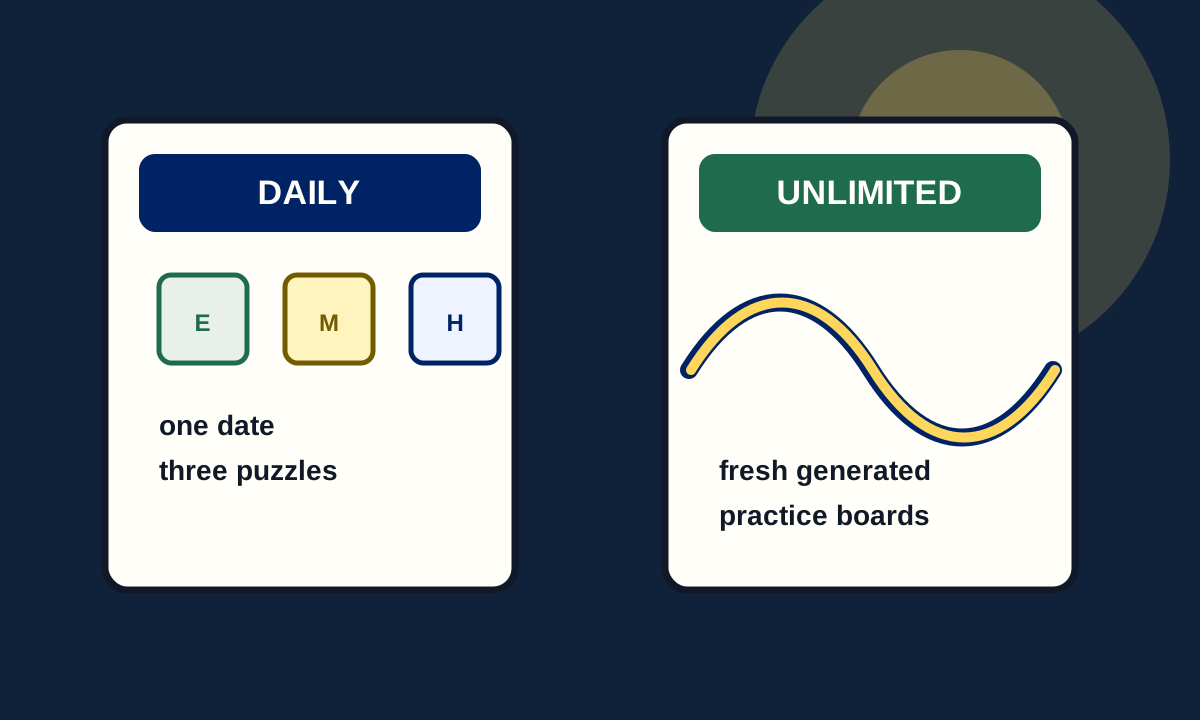
Levels give a 200-puzzle progression path. Daily gives one Easy, Medium, and one Hard puzzle per date. Unlimited generates practice puzzles on demand.
Which difficulty should I choose first?
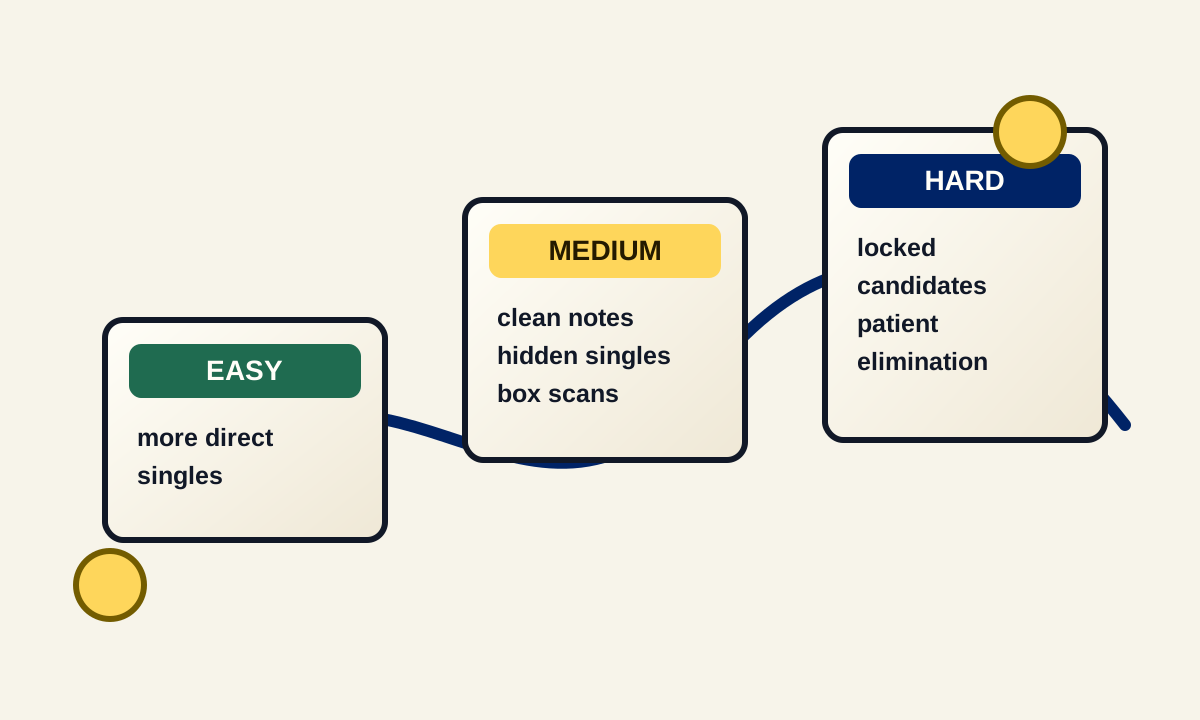
Choose Easy if you are warming up or learning. Choose Medium for regular practice. Choose Hard when you want a slower logic challenge.
How do hints work?
A hint fills an editable empty cell using the puzzle solution and can be undone.
Can I use notes?
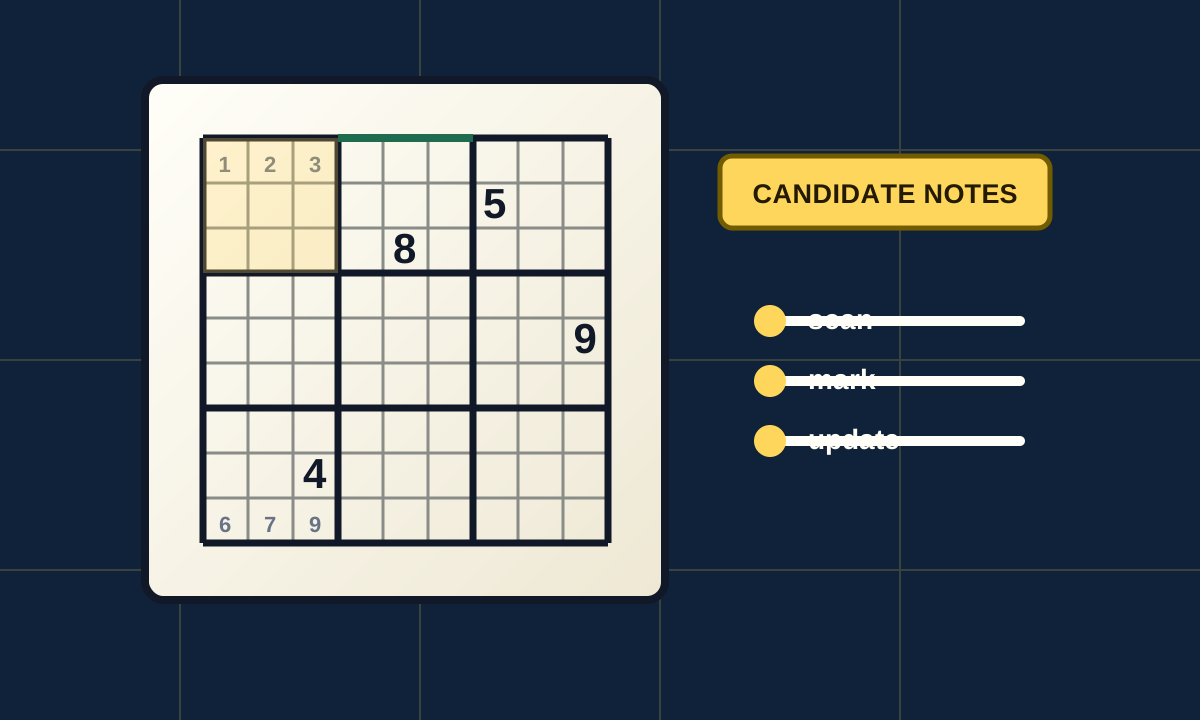
Yes. Turn on Notes, then tap digits to add or remove pencil marks in an empty editable cell.
Does the timer affect the puzzle?
No. The timer is feedback for your own session. You can solve slowly, pause, or return later.
Does Sudoku require guessing?
A fair Sudoku should be solvable by logic. Notes, singles, scanning, and candidate elimination are better than blind guesses.
Can I play on mobile?
Yes. The board, toolbar, and keypad are designed to fit small screens without horizontal scrolling.
What happens if I reset a puzzle?
Reset clears the current puzzle state for that board, including editable answers and notes, while keeping fixed clues.
Why does the page mention New York Times?
The name helps players recognize newspaper-style Sudoku search intent, but this site is independent.
What should I do if I make a mistake?
Use undo if the mistake was recent, erase the cell if only one entry is uncertain, and review the related row, column, and box before resetting. Many errors can be repaired by checking the last few moves instead of wiping the whole puzzle.
How can I solve faster?
Improve reliability first. A stable scan order, timely note cleanup, and fewer unsupported guesses usually reduce solve time more than tapping quickly. After each board, remember where you stalled and fix one habit on the next puzzle.
When should I start using notes?
Easy puzzles may not need notes right away. Start adding candidates when direct placements slow down or when several empty cells in one region depend on each other. Notes should reduce memory load, not fill every cell with noise.
Why do some puzzles start quickly and then stall?
Early moves often come from visible clues, while later moves depend on candidate cleanup and cross-checking. When progress stops, scan by digit across boxes or return to the areas with the most fixed clues.
Is guessing ever a good idea?
Guessing is rarely the best path on a fair Sudoku. If you cannot justify a placement, mark candidates and gather more constraints from nearby rows, columns, and boxes. A justified slow move is better than a fast unsupported one.
How should I use the daily puzzles?
Treat Easy as a warmup, Medium as the core daily practice, and Hard as the optional longer challenge. If you only have a short break, finishing Easy and Medium is still a useful routine.
Which mode is best for beginners?
Beginners should start with Levels or Easy practice because the rhythm is steadier. Unlimited is better once you know which difficulty or technique you want to repeat.
What does local save mean?
Local save means the current puzzle state is stored in this browser. It can usually resume later unless browser data is cleared. It is not the same as cloud sync across devices.
Can children or first-time players use this page?
Yes. Start with Easy boards, focus only on rows, columns, and boxes, and ignore speed at first. Once the basic checks feel natural, notes and Medium puzzles become easier to introduce.
Why does the homepage include so much explanation?
Different visitors need different answers: some want to play immediately, some need a rule reminder, some are stuck on Medium, and some want to know whether the site is free or official. A useful Sudoku homepage should answer those questions without hiding the board.